Fonelas Palaeontological Site
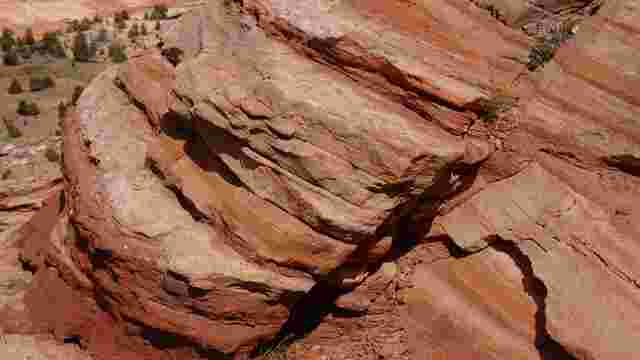
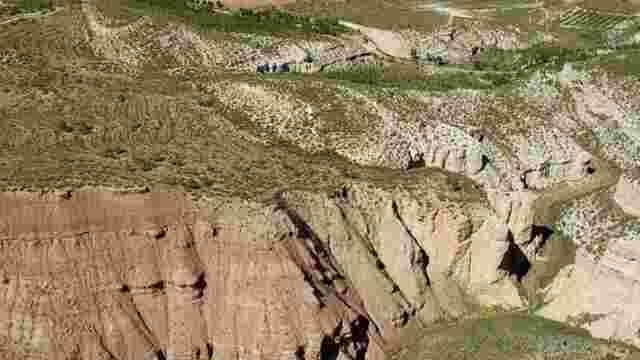
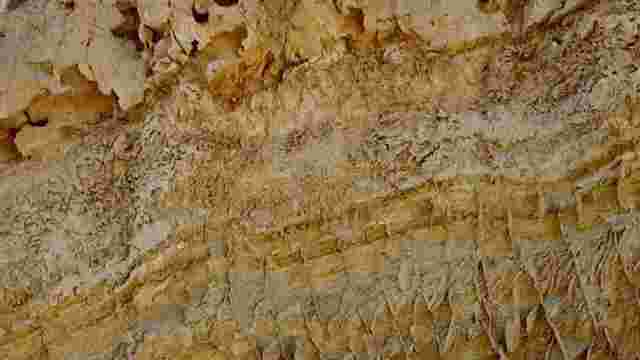
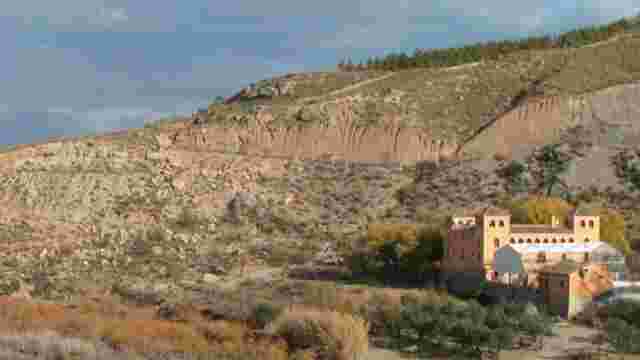
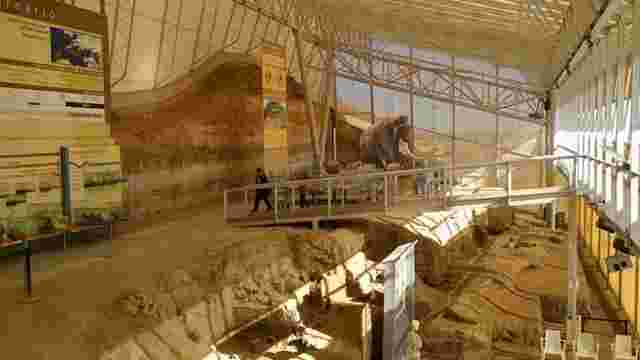
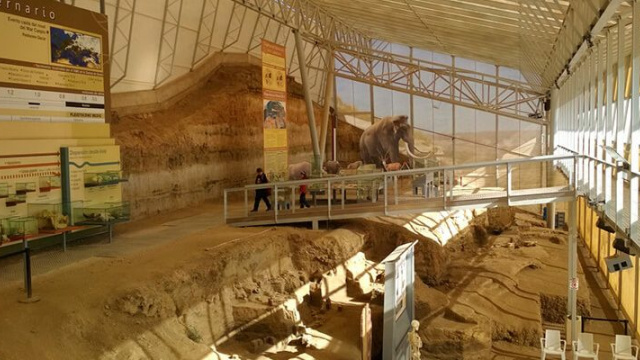
The paleontological site of Fonelas P-1, 2 million years old (magnetostratigraphy and biostratigraphy), corresponds to the sedimentation in a flood plain of an abandoned meander, within a fluvial system, and the state of preservation of the paleontological remains it contains is excellent, given that the lithology in which they are found is of a silty nature with the presence of clayey intraclasts. It is a facies bioturbated by mammalian footprints on the sediments of the abandoned meander, where the accumulating agents have been carnivorous scavengers whose activity also produces organogenic sediments; after the activity of the hyenas (scavengers of the species Pachycrocuta brevirostris), the fossiliferous unit was buried by the sediments of the flood plain as a result of the overflowing of a main channel. The association of Fonelas P-1 is made up of the following species: Colubridae gen. indet., Testudo sp., Aves gen. indet., Mimomys sp., Castillomys sp. cf. C. rivas, Apodemus sp., Stephanomys sp., Eliomys sp., Prolagus sp. cf. P. calpensis, Oryctolagus sp, Erinaceus sp. cf. Erinaceus europaeus, Meles iberica, Vulpes alopecoides, Canis accitanus, Canis etruscus, Canis sp. cf. falconeri, Lynx issiodorensis valdarnensis, Acinonyx pardinensis, Megantereon cultridens roderici, Homotherium latidens, Hyaena brunnea, Pachycrocuta brevirostris, Croizetoceros ramosus fonelensis, Metacervoceros rhenanus philisi, Eucladoceros sp, Gazella nov. sp. aff. G. borbonica, Gazellospira torticornis hispanica, Leptobos etruscus, Praeovibos nov. sp. aff. P. priscus, Paleotragus (Mitilanotherium) nov. sp., Potamochoerus magnus, Capra baetica, Equus major, Stephanorhinus etruscus and Mammuthus meridionalis. This site has a record of a mixture of native European faunas together with African and Asian immigrants. It also has the following singularities: different species and subspecies of large mammals new to science, the first European population of wolf, the first peninsular population of Iberian lynx, the first world population of ibex, the only populations outside Africa of brown hyena and river wild boar, the most modern Spanish population of Paleotraguine giraffids and the last known European population of giant land tortoises of the genus Titanochelon.